

CLUB RECAP: Wellness, Wedge Issues, & the War for Young Minds
How The Right Uses Faux Expertise To Win Voters
Welcome back to UNASB! This newsletter serves as a recap of what we discussed in our last meeting. As a reminder, here at UNSAB, we listen to conservative-leaning podcasts, analyze their messaging and themes, and brainstorm actionable ideas for how the Democratic coalition can strengthen its own approach.
In our last meeting of 2025, UNASB dove into the depths of PragerU, which, according to the Southern Poverty Law Center, “specializes in promoting far-right propaganda through professionally produced media.” In case you missed it, there’s a real chance that PragerU’s children’s content will fill a void left by the Right defunding the Corporation for Public Broadcasting, which could have a real lasting impact on children.
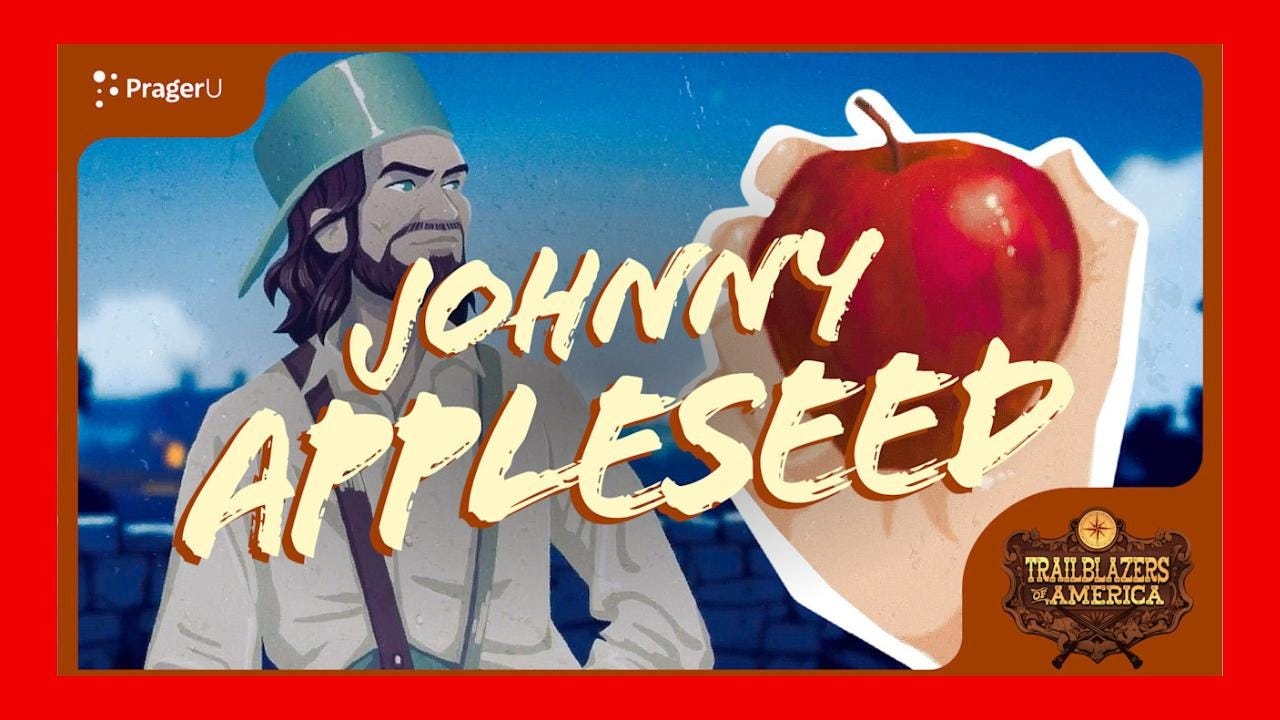
We watched an episode of Real Talk with Marissa Streit (Streit is the CEO of PragerU), along with 3 YouTube videos aimed at educating young Americans— about the “war on Christmas,” Johnny Appleseed, and Venezuela. Through this content, we saw how PragerU’s content offerings work together to normalize conspiratorial thinking, nostalgia politics, and anti-LGBTQ narratives—all while insisting they’re the reasonable middle.
Jillian Michaels: Wellness, “Moderation,” and the Extremism Pipeline
What happens when a fitness celebrity becomes a moral authority on health, wellness, and our decaying social fabric? On Real Talk with Marissa Streit, Jillian Michaels leans on her Biggest Loser fame to grant herself credibility—speaking with the confidence of a “health expert” even as she veers into culture-war and political narratives.
Michaels’ leans heavily on her fitness-celebrity halo: decades of “expertise” and parasocial familiarity make her feel like a trusted guide on topics far beyond nutrition. She starts in her expected lane—obesity, calories, “Big Food”—and then hard-pivots into American history, extremism, and gender-affirming care, carrying that credibility with her as she goes.
Her rhetorical pattern mirrors other right-wing influencers we’ve studied: stake out consensus positions (“Nazis bad,” “Stalin bad”) to brand herself as a centrist, then gradually introduce anti-trans conspiracies about “Big Pharma profiting off kids” and claims that young people can’t have the autonomy to self-direct. She distances herself from Nick Fuentes while praising figures like Charlie Kirk, advocating for a “big tent” where the most distasteful extremists are disavowed so that still-extreme policies feel moderate—especially on trans healthcare.
Michaels’ identity as a lesbian, and a mother, is central to the pitch: she frames opposition to gender-affirming care as hard-earned wisdom from a queer parent “concerned about kids,” even as her arguments bolster a movement attacking LGBTQ+ rights more broadly. Melissa, the host of the show, at one point refers to Michaels’ lesbian identity as her “lifestyle.” This combination—calm tone, personal vulnerability, and endless expert name-drops without real scrutiny—lets listeners feel like they’re following common sense.
One point that stuck out for me personally in Michaels’ interview was an apparent split in the MAHA movement. Michaels advocates for a schema of government regulation to be introduced against what she considers to be harmful practices (especially focusing on the “generally recognized as safe” rule), while Melissa takes a more libertarian approach: that content creators should educate people about what is in foods, and they should then be left to make their own decisions.
Here, there seems to be an opportunity for leftists and liberals to engage with MAHA-curious voters. There are many areas where we also believe in regulation and oversight over healthcare and food quality. The catch is: How do we do it in a way that does not compromise other values like trans healthcare in the process?
PragerU Kids: Simple Stories, Big Agendas
PragerU Kids extends the same playbook to younger audiences and the adults around them, packaging ideology as neutral “educational content.” Videos about Venezuela and Johnny Appleseed strip away context to offer tidy cause-and-effect stories: social programs and “big government” are cast as the road to authoritarian collapse, while westward expansion is framed as brave settlers “taming” a wilderness dotted with unnamed Indigenous “threats” that are given no humanity in the framing.
Like the Michaels interview, these kids’ videos claim to be explaining history or civic life, but the emotional core is persecution and partisan fear: Christians under attack, patriotic traditions erased, boys and men marginalized, and any challenge to hierarchy coded as dangerous “socialism” or anti-Americanism. The 2016 “War on Christmas” content turns a retail greeting into a grand conspiracy about cultural displacement, with a Jewish host arguing that “Happy Holidays” is exclusionary—collapsing real questions about pluralism into a demand for centering Christian norms.
This consistent attempt by the right to create a modern American identity that is inherently exclusionary. By framing a so-called Judeo-Christian identity as the only acceptable American identity, PragerU intentionally excludes Muslims, Hindus, Buddhists, and so many other religious communities who are central to the American fabric.
Because this material surfaces on kid-facing platforms and is marketed for classrooms and homeschoolers, it becomes especially attractive to time-strapped parents and teachers who may not see the ideological framing underneath. It also does double duty for donors: it advances a long-term project of shaping cultural reflexes (“government help = bad,” “inclusion = erasure”) while demonstrating reach and influence to keep the money flowing.
At their core, PragerU videos serve as a right-wing alternative to real historical data, and thus allow parents who either want to avoid uncomfortable conversations or prefer a sanitized version of history for teaching their children. While branding itself as “real history” and “timeless values,” this content instead flattens complexity into ideologically driven stories that reassure adults that their worldview is factual, patriotic, and safe for kids to internalize unquestioningly.
Recognize that PragerU isn’t just an online media producer. They are a highly organized, well-funded conservative operation, with major donors (per Propublica, they took in $70M last year in revenue, and almost 96% of that came from contributions). Their content strategy is disciplined, scaled, and built to shape young people’s views of the world.
Key Takeaways
Celebrity “moderation” is a powerful on-ramp: Jillian’s calm, relatable persona—and background as a “hippie leftie”—makes extreme claims about youth, gender, and institutions that land as reasonable concern rather than reactionary fearmongering.
Perhaps add something about MAHA continuing to be a salient force for the Right?
The MAHA (Make America Healthy Again) movement continues to evolve as a key cultural vehicle for the Right. By blending wellness rhetoric with moral and political narratives, it keeps conservative ideas accessible to apolitical or “moderate” audiences—especially those who distrust mainstream institutions.
Kids’ “education” content is doing adult political work: PragerU’s simple stories and manufactured villains create emotionally satisfying explanations that are easy to repeat and hard to fact-check in the moment.
The throughline of belonging under threat: whether the focus is boys, Christians, or patriotic Americans, both Jillian and PragerU build a narrative that “people like you” are under coordinated attack—and that only their version of tradition, purity, and authority can keep you safe.
What You Can Do
When wellness or parenting influencers veer into politics, pause and separate where their expertise ends from where they’re borrowing authority.
With kids’ content, ask consumers of this media to think about who’s the villain, who’s missing, and what emotions the story wants you (or your kid) to feel about government, minorities, and dissent.
Present alternative narratives of authority: We must present evidence driven by actual science, but it needs to be something that resonates with people. We need to tell more stories about scientists, doctors, and researchers, and show the human element behind their work.
If you want a counterweight rooted in public health and evidence, check out and promote factual shows and resources that treat young people as full agents rather than pawns—a space where many of our own UNASB folks are already doing the work.
We need to recognize that groups like PragerU have significant resources and the discipline to spread conservative narratives at scale. Without our own persuasive storytelling, disciplined approach, and strong media infrastructure, we risk falling further behind.
WHAT UNASB MEMBERS ARE READING
The Golden Globes’ ethics are worse than ever, and no one seems to care
Tradwife vs. Tradwife: Even Christians Have Had Enough of Ballerina Farm
Thanks for reading! Want to get involved? We’re opening up our 4th cohort on January 5th - Sign up here!