


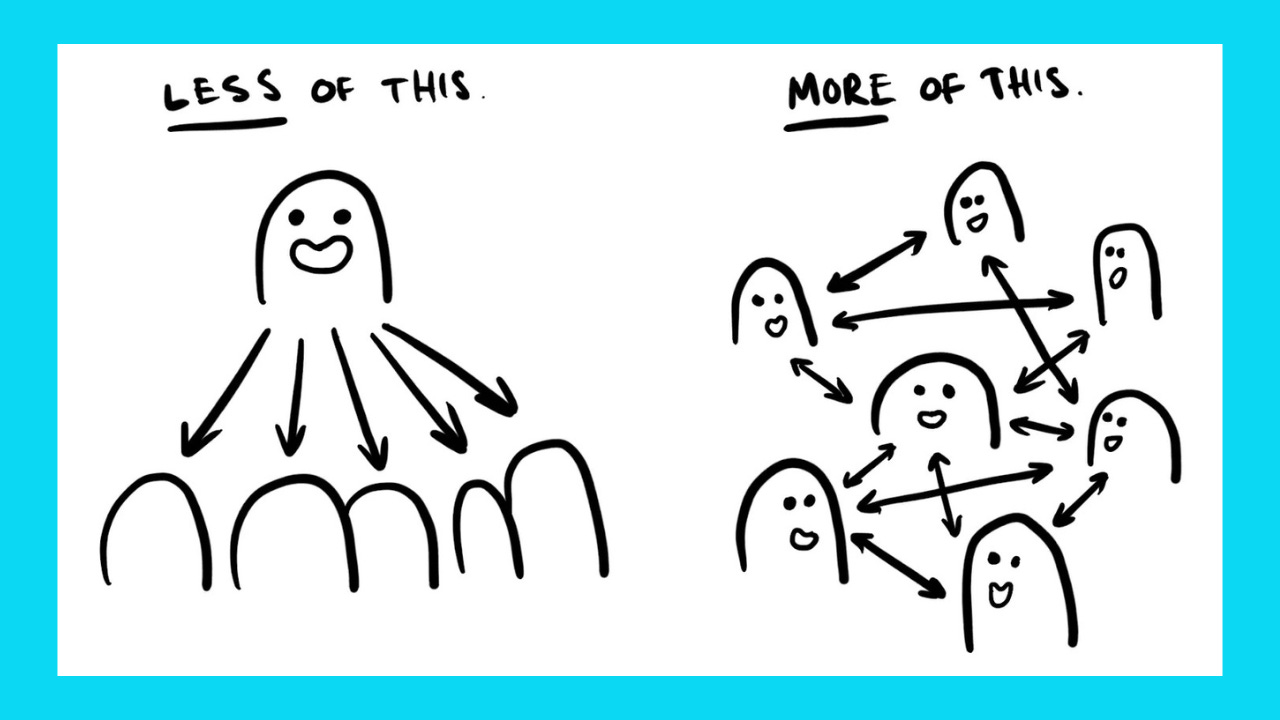
To win, movements need two things: a base and money.
That’s not a cute slogan. It’s a basic organizing truth, often attributed to Saul Alinsky and echoed across generations of organizers since. You can’t build power without people, and you can’t sustain it without resources. You need both.
Right now, much of the left is trying to solve both problems with the same tool: more webinars. Webinars are large, one-way virtual events - typically an hour - where a small number of speakers present slides or talk, attendees are muted, and participation is limited to a chat box or a short Q&A at the end.
People leave informed, but untouched. They know more, but they haven’t met anyone, been asked to do anything, or felt responsible for what happens next.
I understand why. Webinars allow a small number of staff to reach a large number of people quickly. But the way most webinars are designed today is actively undermining the very things we say we’re trying to build.
When people are treated like consumers, they act like critics
Most webinars position people as an audience—they’re consumers, not active participants, and thus they begin to act like critics. We’ve trained people to observe and judge, not to co-create.
People don’t commit to things they feel like they can’t build on with others.
This isn’t about surface-level fixes like music while people log on or a quick feelings check-in before the slides. These gatherings aren’t failing simply because they lack warmth. They’re failing because they ask almost nothing of the people attending.
Follow-up isn’t admin—it’s organizing
As Fred Ross Sr. taught generations of organizers, 90% of organizing is follow-up.
When I was an organizer, I was taught that follow-up works best within 24 to 48 hours. Reach out while the energy is still warm, and people follow through. Wait too long, and the moment passes.
Our webinar follow-up rarely meets that window. Emails go out days or weeks later, if they go out at all. They don’t reliably distinguish who actually attended from who registered and didn’t show. They rarely offer a concrete next step someone can say yes to in real time.
Imagining a different setup to build our base
One-way communication doesn’t build belonging. Effectiveness in organizing terms looks different. It looks like designing for roles and relationships, not just reach.
What if instead of treating recruitment as something that happens automatically once a link is live, you have a volunteer recruitment team whose job is to actually get people to the meeting? They ask each existing member to invite three friends, neighbors, or coworkers. They post in relevant subreddits and listservs. They focus on bringing people in both relationally and attractionally.
Now imagine pairing that with a welcome team who focuses on personalized follow-up after the Zoom room closes. Instead of an automated survey, each attendee gets a short, individual follow-up call to debrief the experience and offer a clear next step. Not “stay tuned,” but something concrete they can say yes to. And instead of quietly writing off no-shows, someone reaches out to say they were missed and personally invites them to the next gathering.
None of this is “efficient” in the narrow sense. It requires people to do real relational organizing.
Addressing the root causes of funding gaps
Right now, much of the left offers emails to grassroots donors and one-way webinars to wealthy individuals and institutions, and then acts surprised when neither group feels deeply invested.
We expect serious commitment after inviting people into a purely consumer relationship: newsletters, slides, no role beyond reading and watching.
Research cited by Joshua Birkholz, CEO of BWF, shows that when donors are friends with other donors, their lifetime value can increase 4X-5X, and their giving is more resilient during periods of economic and political uncertainty.
Relationship building doesn’t happen because someone analyzed the most impressive data or monologued the most inspirational story. It happens because people feel part of something bigger than a transaction.
This kind of connection can happen virtually. Analyst Institute regularly convenes donors for four-hour Zoom gatherings and people are happy to attend. Not because they want to be talked at, but because the time is designed around participation: small-group conversations, one-on-one connections, and full-group reflection.
At the last one I attended, I met a program officer actively looking to fund the exact kind of project someone else I knew was building. I made the introduction soon after, and tens of thousands of dollars quickly went into reproductive justice work. What stayed with me wasn’t the slides, but the feeling of agency—and gratitude for a space designed to make real things happen.
Participation changes what’s possible: the UNASB model
I’ve seen how participatory design changes people over time through Unfortunately Not a Sound Bath.
The majority of people in UNASB don’t work in politics. They’re nurses, lawyers, designers, therapists, students, bankers, retirees—pretty much any background you can think of. What brings us together isn’t professional alignment, but a shared desire to make sense of the political moment and not feel alone in it.
When we gather twice a month, it’s explicitly participatory. Members are expected to listen to a 1-2 hour right-wing podcast episode or watch a YouTube video in advance and come prepared with reflections on juicy questions in small groups. People’s cameras are on, and if they don’t participate, breakout leaders directly ask you one of those juicy questions. People bring different life experiences, instincts, and reactions that we each learn from.
UNASB not only builds a base—it also builds resources. Fundraising pitches happen in meetings to support operating costs. We encourage our friends not in the club to become paid subscribers of this Substack to support sharing our learnings. Many of us provide introductions, ideas, and frameworks to build the club’s infrastructure.
Over time, something shifts for all of us. Each of us gets better at listening. Our worldview expands. We feel more grounded in how we talk about politics, not just in the comments section but with family, coworkers, and neighbors.
When I ask people what has mattered most, it’s rarely the content itself. It’s the relationships and infrastructure we’ve built together. I see it in the IRL happy hours that spin up on their own in cities across the country, and in the many Signal threads I’m now part of with different members. People talk about feeling less isolated, more hopeful, and clearer about what they can actually do next.
None of this is accidental. The way we design our gatherings trains people how to show up.
If we keep designing webinars for passive consumption, we’ll keep getting spectators. If we design for participation, we build a base—and the resources that follow.
