

Laundering BS in the Attention Economy
How far right messengers use podcasts to mainstream their ideas without you knowing.

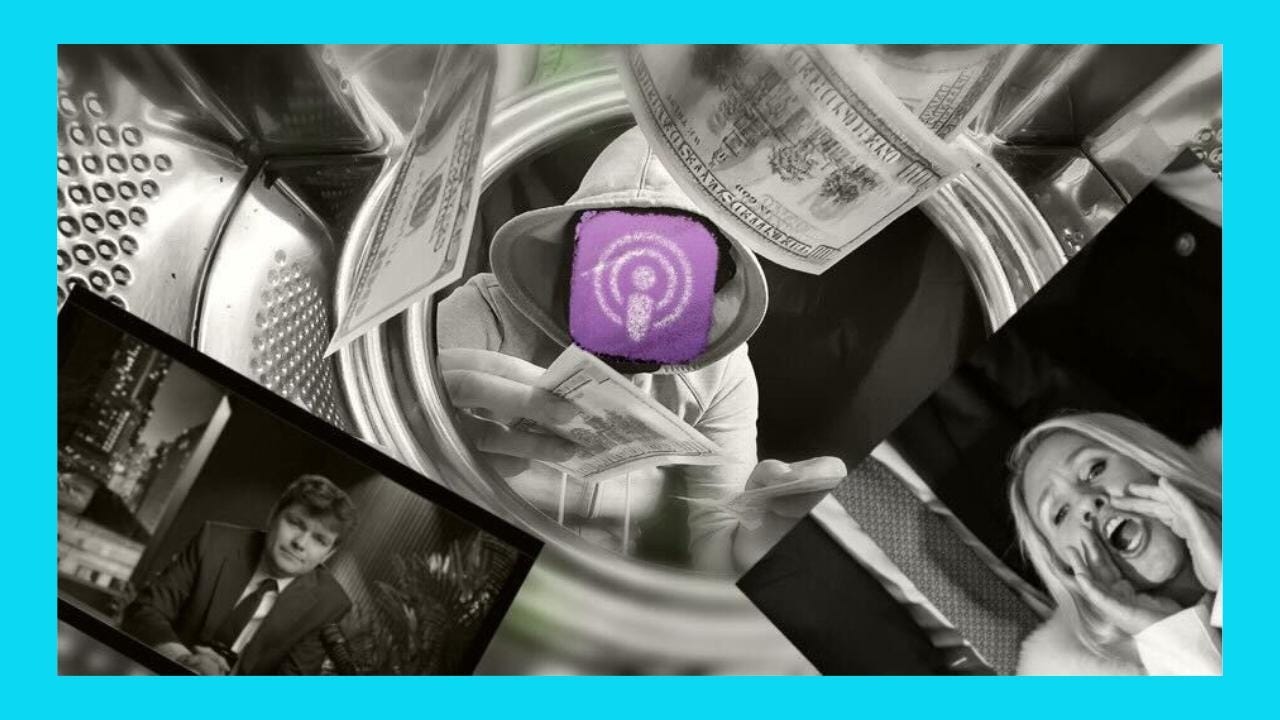
Taylor Swift’s fiancé makes more money from his podcast than from the NFL. The Vatican uses a podcast, The Pope’s Voice, to broadcast papal speeches around the world. Even Ted Cruz—who once liked an X-rated tweet on the anniversary of 9/11—drops new podcast episodes three times a week.
Why does Ted Cruz have a podcast? As he explained last year, “I do the podcast to equip and arm you, to give you the information you need.” But there’s a difference between the information you need and the information he wants you to have. That gap is where podwashing comes in.
Podwashing (verbal noun): the act of improving the public image, reputation, or perception of a controversial figure or idea through a podcast.
Podcasts increasingly function as rebrand machines—spaces where extremist views, discredited figures, and outright lies are glossed over as casual conversation and banter, rarely interrogated for more than a few seconds.
Example 1
Ted Cruz
U.S. Senator from Texas; co-host of Verdict with Ted Cruz.
How was he podwashed?
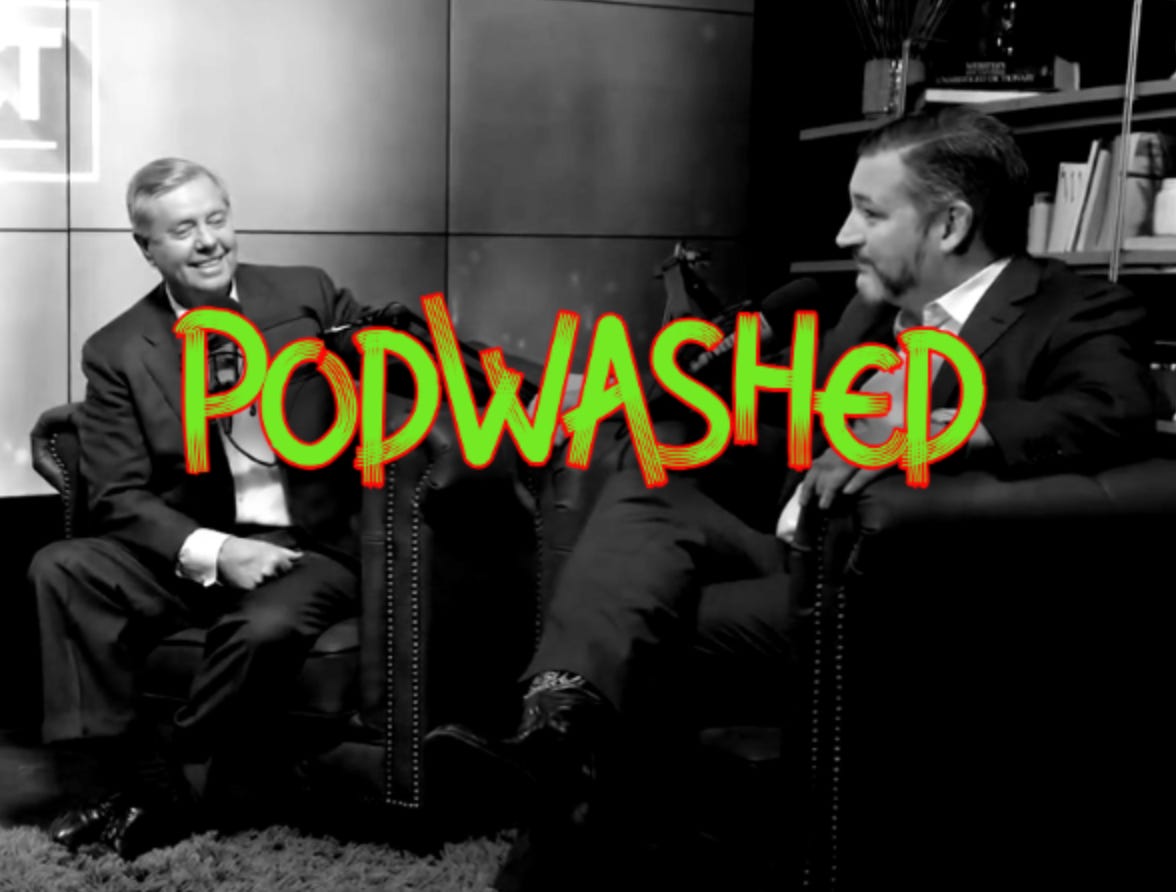
Once widely regarded as the most hated man in the Senate, Cruz rebranded by growing a beard and launching a podcast, where he converts former enemies into friendly guests for clout.
Senator Lindsey Graham once famously said, “If you killed Ted Cruz on the floor of the Senate, and the trial was in the Senate, nobody would convict you.” Yet when Graham appeared on Cruz’s podcast, he opened with: “Welcome to Verdict with Ted Cruz, the number one podcast in the entire country.”
Whether that line was a joke hardly matters. Casual listeners may not realize it was one—and the influence of podcasts in today’s attention economy is hard to overstate. A September 2025 Pew Research Center study found that nearly four in ten U.S. adults under 50 (39%) say they get news from podcasts often or sometimes.
The downstream effects of podwashing are harder to measure than downloads, which is why pushback matters—and why its absence is so damaging. When hosts lack the skill, interest, or incentive to separate opinion from journalism, guests are free to reshape their public image unchallenged. A comedian flattered by access to a powerful politician may fail to ask tough questions, justifying it as “calling it like I see it.” But presenting ignorance as fact doesn’t just entertain—it misleads, as Adam Pally recently noted on Good One.
Hosts have agendas. So do their guests. Podcasts often become vehicles for advancing toxic brands and bad ideas under the cover of authenticity.
Example 2
Nick Fuentes
White nationalist streamer and increasingly influential right-wing figure.
How was he podwashed?
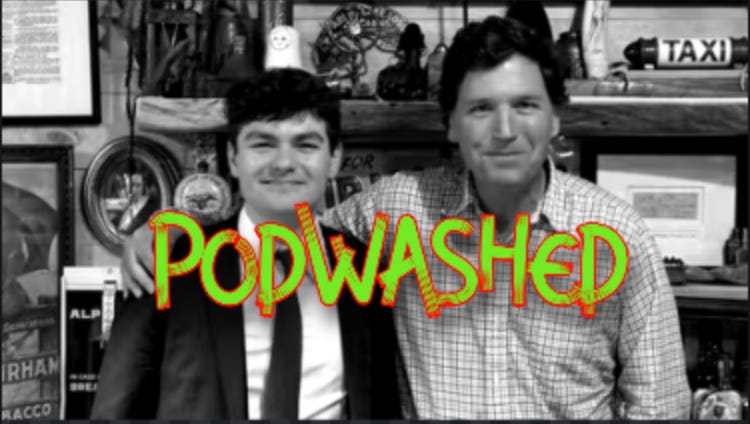
On Tucker Carlson’s podcast, Fuentes was given a massive, largely unchallenged platform to pitch his extremist worldview to a mainstream audience—including his admiration for mass murderer Joseph Stalin.
Fuentes: “That’s Joseph Stalin’s birthday. I’m a fan.”
Carlson: “Oh, you’re a fan?”
Fuentes: “Always an admirer.” [Chuckles]
Carlson: “We’ll circle back to that.”
They did not circle back.
Nick Fuentes was podwashed.
The backlash was swift. Carlson was condemned by figures across the right, including Ted Cruz himself. Even Heritage Foundation president Kevin Roberts publicly apologized for defending Carlson. (Editor’s note: Carlson has since been Pres-washed—a more powerful variant of podwashing, in which the President tells people to be nice to you after you platform an antisemite.)
Podwashing isn’t confined to the right or the “manosphere.” The intimacy of podcast settings—garages, attics, hikes—makes confrontation awkward. Even hosts who strongly disagree with their guests can unintentionally enable them. Whether out of politeness, a desire to seem fair, or sheer conversational overwhelm, even skilled interviewers struggle to counter bad-faith actors in real time.
Example 3
Steve Bannon
Political strategist, media executive, Trump advisor—and podcast host
How was he podwashed?
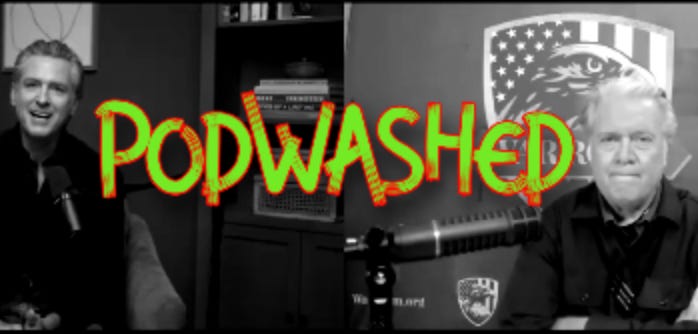
Last winter, Governor Gavin Newsom faced criticism from journalist Kara Swisher for being “too chummy” with Bannon during his appearance on This Is Gavin Newsom. Swisher’s concern wasn’t about platforming Bannon, but about failing to confront him forcefully.
As Swisher explained on The View:
“You should be talking to everybody, including Steve Bannon—he’s very powerful. But you have to push back and say, ‘That’s a lie. That’s a lie.’”
Instead, Bannon emerged cleaner than he arrived—purified in the waters of This Is Gavin Newsom.
Allowing figures like Cruz, Fuentes, and Bannon to reframe past scandals, elevate their profiles, and promote their visions of the future without real-time fact-checking makes podcast appearances enormously valuable. Newsom did challenge Bannon on the Big Lie—but many argue the damage was done regardless.
So where does that leave us?
Like social media, podcasts convert engagement into value. Hot takes drive clicks, clicks drive revenue, and as long as “line goes up,” accountability becomes optional. History may not repeat itself—but it rhymes, especially when monetized.
What can the left do?
Call it out.
If you hear podwashing, say something. Kara Swisher didn’t have Newsom’s audience, but she went to the source and publicly explained why pushback matters—even when it risks discomfort.
Stay engaged.
Podwashing won’t disappear, which means progressives must continue entering these spaces. Bernie Sanders went on The Tim Dillon Show. Zohran Mamdani appeared on Andrew Schulz’s podcast. James Talarico gained traction after Rogan. Ro Khanna sat with Patrick Bet-David.
In the battle for attention, sometimes you have to show up and throw down.
Starve the algorithm.
Use screenshots and transcripts instead of links. Call out the problem without feeding the machine that profits from your outrage.
Collect receipts.
You can’t listen to everything—but tools like Tapesearch and Listen Notes make it easier to track what’s being said, where, and by whom. You can search for key-terms like “reproductive rights” or, for Ted C., “Cancun.”
When it only takes a few friendly podcast appearances for people to forget who these figures really are, accountability becomes an uphill fight. Talk to people. Ask what they’re listening to. Learn where they’re coming from—and push back against podwashing.
If the podcaster won’t do it, you still can.
 | A guest post by
|