

How I'm Choosing Empathy Following the Mass Shooting at My School
Following the horrific events at Brown University, the internet descended into hateful noise. My neighbors channeled community, empathy and demonstrated how to build a safer world.

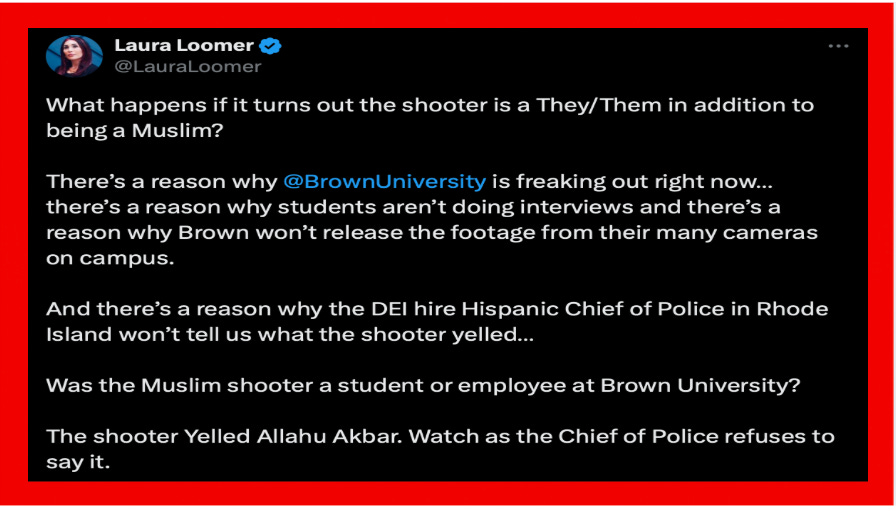
Everyone is talking about my school on social media. The political media slop machines are in full gear. Laura Loomer won’t stop spewing unfounded, racist, Islamophobic garbage. Hateful, attention-seeking narratives are everywhere. I am reluctant to add fuel to the online dumpster fire. Especially when everything online is such a stark contrast to the facts on the ground.
What’s actually happening
When a shooter opened fire on an economics exam review session on Saturday afternoon, I was luckily several blocks away. When news broke, I sheltered inside a nearby store. Friends and strangers crowded around a few phones to listen to news coverage. Elsewhere, grocery store employees opened their break room to students. Campus workers welcomed students into their homes. Family, friends, and distant acquaintances texted and called. These narratives are missing from the national conversation.
The Brown and Providence communities are coming together in an incredible way. Restaurants are giving out free food. Professors, neighbors, and students are coordinating rides to airports. Alumni are contributing tens of thousands of dollars to help kids purchase and move their flights to go home.
Watching news coverage and TikTok experts unpack the situation, I feel angry and worn out
In Unfortunately Not A Sound Bath (UNASB), we attempt to understand right-wing media and build strategies to reach MAGA-curious audiences. We are trying to disrupt the unreality of conservatives’ world, where everyone is out to get them and minoritized racial, ethnic, and religious groups are the dangerous “other.” We often brainstorm the right phrases to say, questions to ask, and narratives to push. Yet, as I see the right-wing political ecosystem whirling with the fodder of my school’s tragedy, I struggle to imagine that “the right words” could do much to dismantle the toxic shitstorm on my phone.
This community gives me hope for the path forward. The neighborhood I see and stories I hear are far removed from my social media feed. Effectively reaching people with opposing political views requires trust and community as a prerequisite. For instance, right-wing figures with ties to Brown are urging and exercising caution against spreading inaccurate talking points.
How do we prevent future attacks? How do we get more people on the side of gun safety policies? This problem feels insurmountable when Sandy Hook, Parkland, Uvalde, and countless more mass shootings, alongside everyday community violence, have not been enough to disrupt the system.
The answer is not by sidestepping politics
We know the policy solutions. Our country doesn’t have to live this way. But, as we chart a path forward, I am committing myself to a new tool in my organizing toolbox—one that UNASB has honed. Lobbying, rallying, protesting, bird-dogging, and posting all have their place. But from what I’ve seen on the ground at school, and through third spaces like UNASB, the answer feels clearer than ever: community-building. Fostering relationships and having real, honest conversations—even nonpolitical ones—is such a deradicalizing force. Physically and emotionally existing with neighbors with other worldviews will change their worldviews, and yours.
Building power is an exercise in empathy
Ending gun violence means not only caring about the victims of senseless attacks and their families, but also about everyday Americans who equally care about not seeing kids shot but hold politically distant views. We must approach people who have reached different policy conclusions with compassion and curiosity, recognizing that they share the same concern about the gun violence epidemic. We cannot reserve our empathy for those to whom it’s easiest to give.
In a 2017 New York Times op-ed, political scientist Hahrie Han examined how gun-rights groups like the NRA engage people who do not necessarily agree on gun policy. People often join movements in search of community and responsibility. To feel seen and to be wanted. Half of frontline anti-abortion activists did not hold those beliefs when they first attended an anti-abortion event. Groups on the left can be terrible at this practice. When we draw the boundaries of our community associations and political projects across rigid ideological lines, we lose people.
Yes, this moment warrants moral outrage. But anger alone has not delivered the lasting change this country needs. I will continue promoting my views on essential gun violence prevention policies, but I also want people to be willing to listen—and that means being open to listening myself.
Much of what I’ve gained from my past six months of UNASB meetings is a lesson in empathy rather than rhetorical strategy. If everyone paid a little more attention to caring for their neighbors rather than social media, we’d be in a kinder and more just world. And if we treated one another with the generosity and care that my community has shown, we could build a more sane political arena, deliver policy solutions, and save lives.
 | A guest post by
|