

Candace Owens Pitches Harvey Weinstein’s Next Big Project
A conservative influencer, a disgraced Hollywood mogul, and a two-hour masterclass in how the right manufactures male innocence.

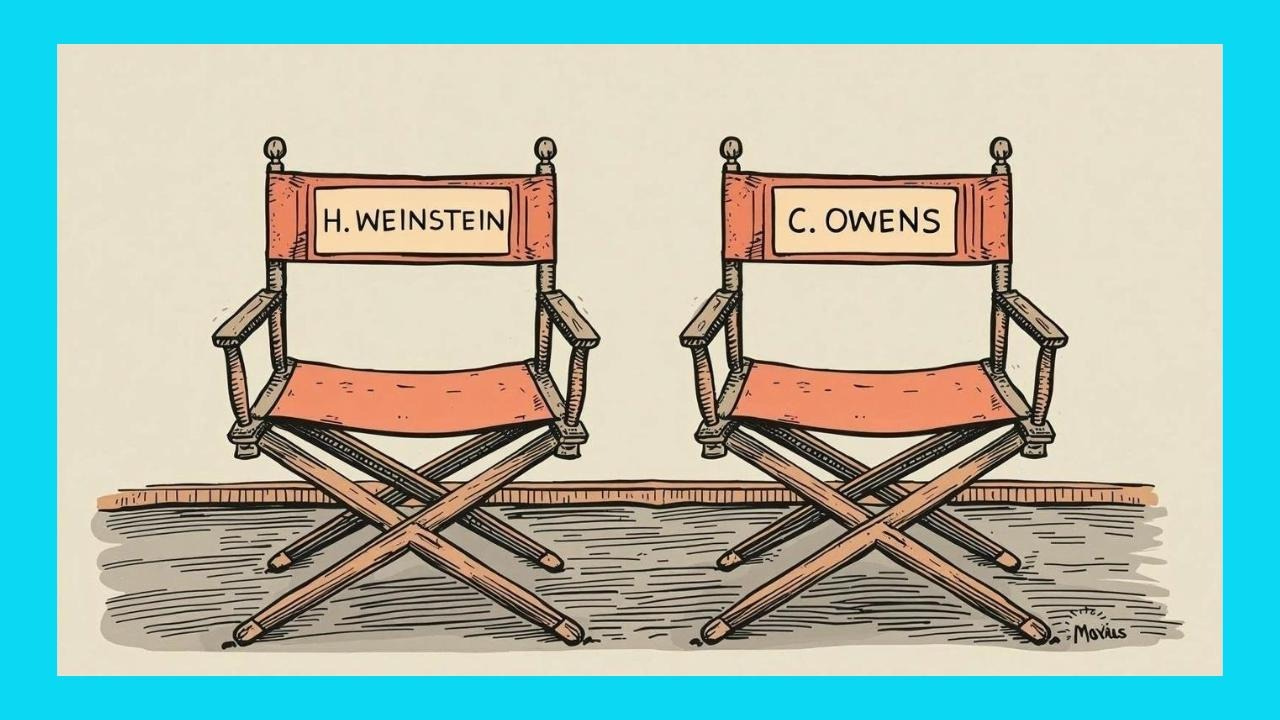
UNASB’s recent listening assignment of Candace Owens’ July 30th interview with Harvey Weinstein was a difficult one. Not just because Owens chose to platform an accused and convicted sexual predator as an investigative journalist interview for the truth, but why Owens believed the conversation mattered at all.
This was theatrical staging for a worldview built on suspicion, suspense, institutional gendered power, male impunity, and the fantasies that protect powerful men. Cue the title card for the low budget remake of Eyes Wide Shut.
Owens slipped easily into the part of the master of ceremonies, the enforcer of the rituals, the interpreter of the rules. She doesn’t take part but she protects the order. Weinstein becomes the fallen protagonist, once protected by proximity, safe among the powerful, and free to move within the institution, now exiled.
In this version, Owens doesn’t unearth anything new. Instead, she lays out a shadowy system, a cinematic image about America, institutions, corruption, and where the social patriarchal order itself is under attack. It’s the new emotional economy on the right, where symbols of persecution and accountability are redefined, where institutional distrust is fed into the political identity steam engine.
Casual listeners may be drawn into the “human interest” narrative. In an age of dramatic True Crime podcasts, this production postures as an investigation. However, we at UNASB aim to expose conservative media for what it is, infotainment - a performance of narrative over substance. After all, as content craving consumers, all that salacious drama really grabs our attention! And what comes after the listener has been successfully infotained? A slew of right-wing political positions in their queue. This is a key tool in the right’s pipeline designed to radicalize as many Americans as possible.
Act 1: From Facts to Feelings
During the interview, Owens repeatedly nudges Weinstein to “name names” because suspense and implication is the point. Candace has perfected the parts of real conspiracies, villains and vibes. “If they can take him down, imagine what they’ll do to you!” Conveniently, this shifts the emotional burden on the listener from evidence to insecurity.
Checking boxes with bold claims but no evidence, insinuations of shadowy coordination, an invitation for listeners to “just believe me,” evoke that no man is safe, the justice system is a weapon, and listeners should see themselves in a disgraced Hollywood producer.
Owens is rhetorically cultivating a pivot in the psychological climate versus defending Weinstein - a shift from examining evidence to examining emotions.
Act 2: Rebranding the Fallen Man
Owens reframes Weinstein through religious language - sin, redemption, salvation. He’s a complex figure and a prodigal son punished by a secular world. The underlying message? The mother protecting her sons, and any mother watching could one day be in her shoes defending her sons. That is some powerful crafted storytelling!
Weinstein, interestingly, resists Owens’s conspiratorial bait. When asked to speculate who targeted him, he hesitates. The very institutions Owens characterizes as corrupt, Weinstein dreams of a return.
He talks about scripts. About movies he would make. He wants back in and still thinks the institution will take him back!
“If I wasn’t canceled or blackballed, I would make movies again.”
Weinstein seeks redemption without burning bridges. For him, the system misjudged him. This exposes how the interview is less about truth and more about agenda alignment.
He does see himself as a good man, friend, father, but admits something essential, “I was always kind to her…I opened the doors for her.”
This is a transactional worldview in one sentence: You give me what I want, I give you access.
The interview becomes a clumsy duet between Owens’s conspiracy needs and Weinstein’s need for reassurance.
Act 3: Male Victimhood as Emotional Currency
Owens positions herself as the woman willing to say what men cannot: culture hates men, institutions hate men, #MeToo harms men,
She insists the world is unsafe for men who will be victimized by predatory women.
“We can’t live in a world where women throw out their bodies…and then say they were raped.”
She’s building an empathy machine for male grievance, an on-ramp for those that watched Mad Men and thought, “those were the good ol days.”
Wait, did wokeness start when powerful white men stopped three-martini lunches, smoking Pall Malls in meetings, and trying to sleep with their secretaries? If I were Candace raising that in the interview, I’d guess the next line would be, we’re just asking questions here.
This is where her narrative fully mirrors the Eyes Wide Shut ritual, it’s the interchangeable, silent, naked, and disposable women we should fear. Perhaps this is why her investigations don’t include speaking to many accusers since they frankly don’t matter to her.
Conclusion: Putting the Popcorn Down
For any casual viewer, this interview is easy to watch like it’s all a show - a popcorn moment, dramatic enough to hold attention but still distant enough to separate from the reality. It can be tempting to treat Owens’s performance and Weinstein’s self-pity as just an episode in the endless churn of online spectacle, but this is exactly how the pipeline to the fringe right works.
When politics becomes entertainment, we stop asking questions. We watch passively, we absorb the emotional beats without seeing the ideological layers beneath. It may feel like a movie, but we are dealing with real lives and actual consequences.
In the end, we leave without a revelation but resignation. The institution remains intact for those that accept the terms. Weinstein affirms Owens, “it’s weakening because of you.” For us, the realization we see isn’t the danger of people taking Owens and Weinstein too seriously, but rather that they don’t take them seriously enough.
Our political life depends on refusing to just be the audience.
 | A guest post by
|